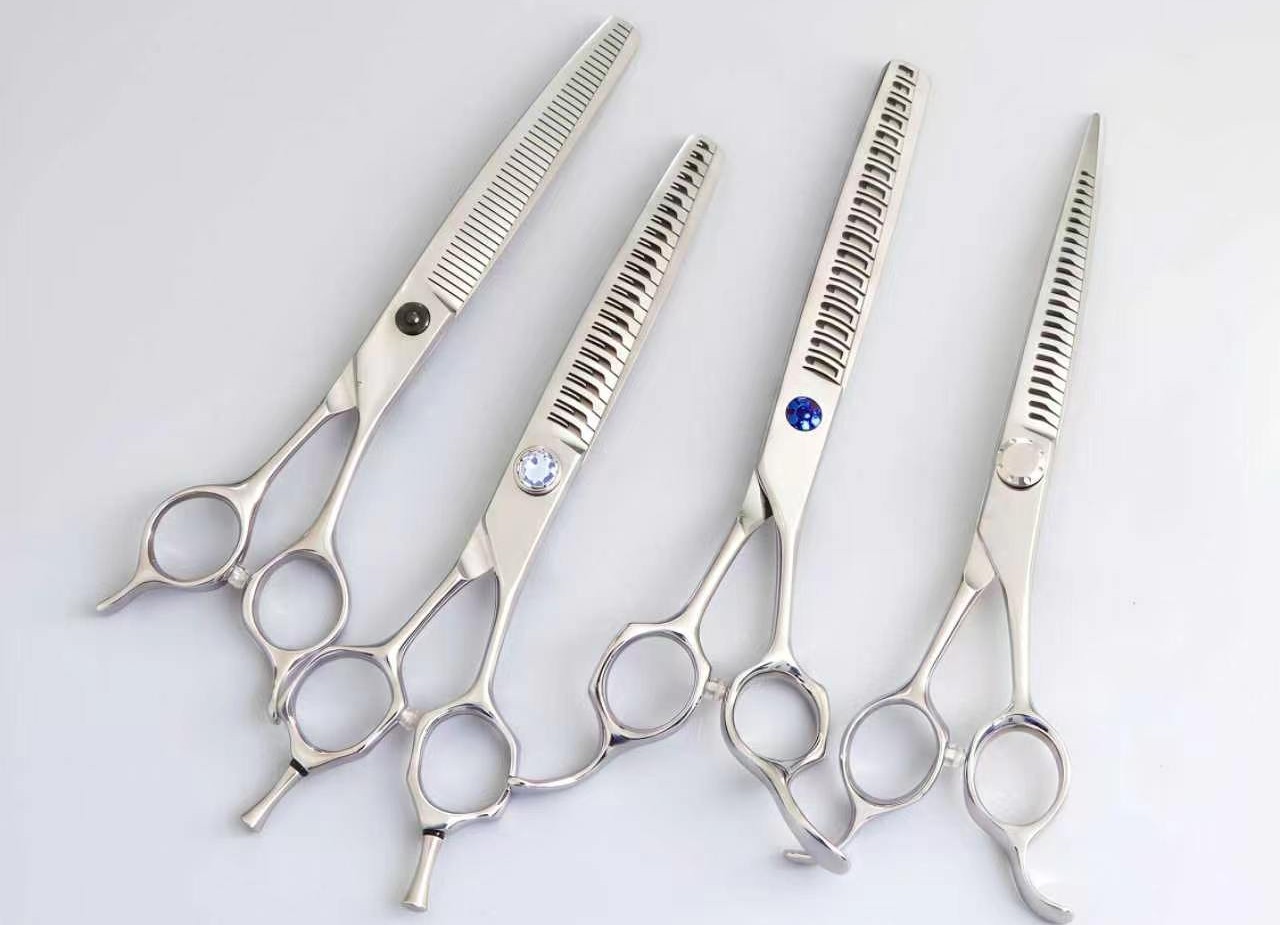
The same pair of professional hair cutting shears that retails for $89 in a salon supply store typically leaves a factory for $18–35. The difference is not quality — it is the number of hands the product passes through on its way to your shelf.
That gap is why wholesale sourcing matters, and why it is worth doing carefully. This guide is written for three kinds of buyers: salon chains and barber franchises equipping multiple stations, retailers and e-commerce sellers building a shears category, and brand owners planning to launch their own label. By the end, you will know where to buy, what you should be paying, how to verify a supplier before wiring money, and how the custom-logo process works from first inquiry to container loading.
1. The Wholesale Market at a Glance
Professional shears are made in a handful of established production clusters, each with a distinct position in the market:
- Japan — heritage craftsmanship and premium steels (VG10, powder metallurgy). Excellent quality, but limited capacity and the highest unit prices.
- Germany (Solingen) — precision engineering with a strong brand premium. Best suited for luxury positioning.
- China (Yangjiang and surrounding Guangdong region) — the world's largest exporter of professional shears. Full supply chain in one place: imported Japanese steel, forging, CNC grinding, PVD coating, and packaging. This is where most wholesale volume actually ships from — including many products later sold under Japanese and European brand names.
- Pakistan — low-cost carbon steel scissors. Fine for household use, rarely acceptable for professional salon work.
Key insight: wholesale price differences are driven first by steel grade and forging method, and only second by brand or origin. A forged 440C shear from a Chinese factory outperforms a cast no-name shear at any price point.
Here is what realistic wholesale pricing looks like, per unit, at typical order quantities:
| Tier | Wholesale Unit Price | Typical Spec | Best For |
|---|---|---|---|
| Entry | $8–15 | 440A/420 steel, cast or entry-level forged, beveled edge | Training academies, giveaways, budget retail |
| Mid-range | $20–50 | 440C forged, convex edge, adjustable tension, color finishes | Salon chains, barber shops, e-commerce bestsellers |
| Premium | $60–120+ | VG10, cobalt alloy, Damascus patterns, ball-bearing pivot | High-end retail, master stylists, flagship brand SKUs |
Bottom line: for most B2B buyers, the mid-range tier is the volume sweet spot — professional-grade performance with enough margin room for retail markup or salon resale.
2. Where to Buy: Four Sourcing Channels Compared
There are four practical ways to source wholesale hair cutting shears, and the right one depends on your order size and how much vetting you are willing to do yourself.
| Channel | Typical Markup vs Factory | MOQ | Best For | Watch Out For |
|---|---|---|---|---|
| B2B marketplaces (Alibaba, Made-in-China, Global Sources) | +5–15% | Low (10–50 pcs) | First orders, comparing many suppliers fast | ⚠️ Mixed trader/factory listings; paid "verified" badges ≠ audited quality |
| Trade shows (Cosmoprof, Beautyworld, Salon International) | Factory price | Negotiable | Handling samples in person, meeting real manufacturers | ⚠️ Travel cost; limited edition cycle (1–2 shows per year) |
| Factory direct (supplier websites, Google search, referrals) | Baseline | 50–200 pcs | Repeat orders, custom logo programs, best unit economics | ⚠️ You carry the vetting burden; lead time 30–60 days |
| Local distributors | +50–150% | None | Urgent restock, trying a category before committing | ⚠️ Thin margins; no customization; limited catalog depth |
Rule of thumb: use marketplaces or distributors to test a product with minimal commitment, then move repeat volume to a factory-direct relationship once the SKU proves itself.
A common factory-direct starting point is a curated multi-piece set rather than single shears — it simplifies your first order and gives end customers a complete toolkit in one SKU:
Cutting Shears Set — a ready-to-retail multi-piece set, a common first wholesale SKU
3. How to Vet a Wholesale Supplier
This is the step most buyers skip — and the one that decides whether your second order resembles your first.
Factory or Trading Company?
Both can be legitimate partners, but you deserve to know which you are talking to. Five signals that separate a real manufacturer from a middleman:
- Business license scope — a Chinese factory's license lists "manufacturing"; a trader's lists "wholesale/trade." Ask for it directly.
- Video walkthrough on demand — a real factory can film its forging, grinding, and QC lines in under 24 hours. Traders offer excuses.
- Technical depth in answers — ask why their convex edge holds longer than a competitor's. Factories answer in steel grades, HRC values, and grinding processes. Traders answer in price.
- Customization capability — factories quote logo laser-etching, PVD colors, and handle modifications with specific MOQs. Traders are vague.
- Consistent product line — a factory's catalog clusters around what its machines are tooled for; a trader's catalog is a supermarket.
The single most useful request: "Please send a short video of your production line, filmed today, with today's date visible." Serious manufacturers comply without hesitation.
A Four-Step Quality Verification Process
- Step 1 — Material certificates. Request mill certificates (MTC) for the steel batch. A supplier claiming "Japanese VG10" should produce import documentation on request.
- Step 2 — Blind sample test. Order paid samples from 2–3 shortlisted suppliers, remove all markings, and have a working stylist cut with them for a week. Hands beat spec sheets.
- Step 3 — Pre-shipment inspection. For volume orders, book a third-party inspection (SGS, QIMA, or similar) against an agreed AQL standard before the balance payment.
- Step 4 — Consistency on reorder. Place a small second order before committing to large volume. Consistent edge quality across batches is the true test of process control.
Not sure how to judge a sample once it's in your hands? Our guide to what makes shears professional includes a four-step field test — dry-close sound, wet hair test, gravity close, and balance check — you can run in under two minutes.
Which Certifications Actually Matter
| Certification | Verdict | Why |
|---|---|---|
| ISO 9001 | ✓ Meaningful | Indicates documented process control — the root of batch-to-batch consistency |
| REACH / RoHS compliance | ✓ Meaningful | Required for EU market entry; confirms plating and coatings are tested |
| CE marking | ✗ Weak signal | Self-declared for hand tools; adds little assurance on its own |
| "Verified Supplier" badges | ✗ Weak signal | Platform-paid status; verifies the company exists, not that shears are good |
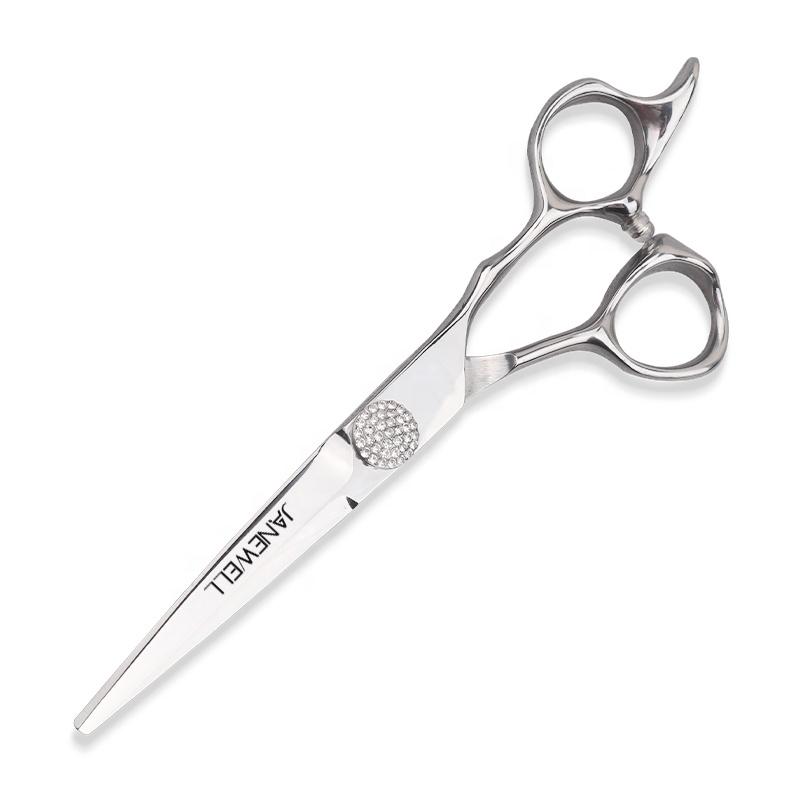
Premium steel products are the easiest category to verify, because the material story is documented end to end:
VG10 Cutting Shears — mill-certified Japanese steel, verifiable material story
4. Understanding Wholesale Pricing
When a factory quotes you a unit price, seven variables are baked into that number:
- Steel grade — the single largest cost driver. VG10 typically adds 40–80% over 440C; powder metallurgy steels multiply it further.
- Forged vs. cast — forging aligns the metal grain and produces a denser blade that holds an edge; casting is cheaper but structurally looser. Forged is the professional standard.
- Edge geometry — hand-honed convex edges cost more than machine-ground beveled edges.
- Handle complexity — offset and crane handles, swivel thumbs, and ball-bearing pivots each add machining and assembly cost.
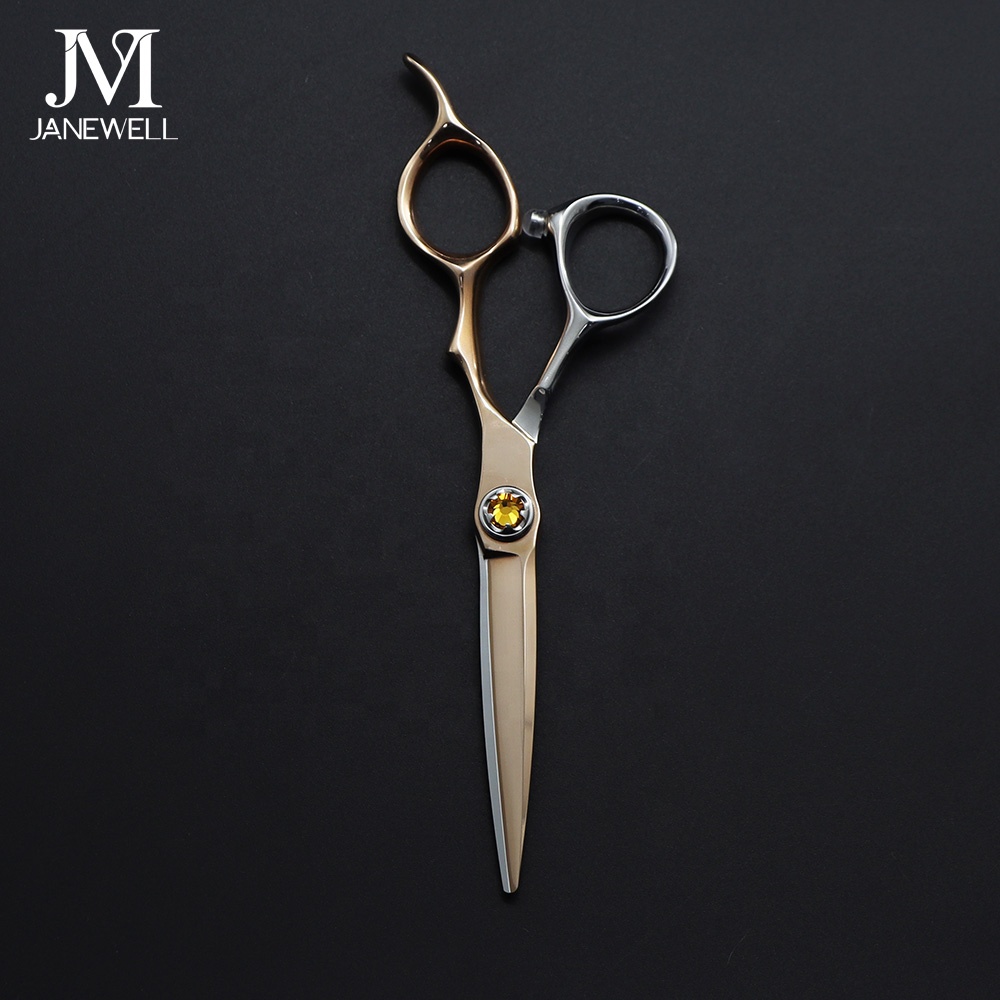
- Surface treatment — PVD coatings (rose gold, black, rainbow) and Damascus patterning are priced per batch.
- Order quantity — volume amortizes setup, grinding fixtures, and QC across more units. This is where your leverage lives.
- Customization degree — see the OEM section below; every logo, color, and custom insert adds unit cost or one-time tooling.
What Quantity Discounts Actually Look Like
A representative tier structure for a mid-range forged 440C shear (illustrative numbers, category-typical):
| Order Quantity | Unit Price | Effective Saving |
|---|---|---|
| 50 pcs | $32 | — |
| 200 pcs | $26 | 19% |
| 500 pcs | $21 | 34% |
| 1,000+ pcs | $18 | 44% |
About those
$5 "factory prices"you see on low-end listings: the math is real, and so is the product — cast housings, low-grade steel, no edge-holding, and a return rate that quietly erases the saving. For professional use, below roughly $8–10 ex-factory, something important has been removed.
The Hidden Cost Checklist
Budget for these before comparing quotes, or your unit economics will surprise you later:
- ⚠️ Tooling/mold fees — one-time charges for fully custom designs ($150–600 depending on complexity)
- ⚠️ Logo setup — laser etching is usually free above threshold quantities; custom embossing dies are not
- ⚠️ Packaging upgrades — printed color boxes and inserts are quoted separately from the shears
- ⚠️ Freight — air (3–7 days, expensive) vs. sea (25–40 days, ~10× cheaper per unit); plan sea freight for replenishment orders
- ⚠️ Duties and import handling — check your destination HS code (typically 8203.00 for shears) before landing your first container
Retail-ready packaging is also a genuine margin lever, not just protection: a branded leather case converts a $26 shear into a $79 gift-tier product.
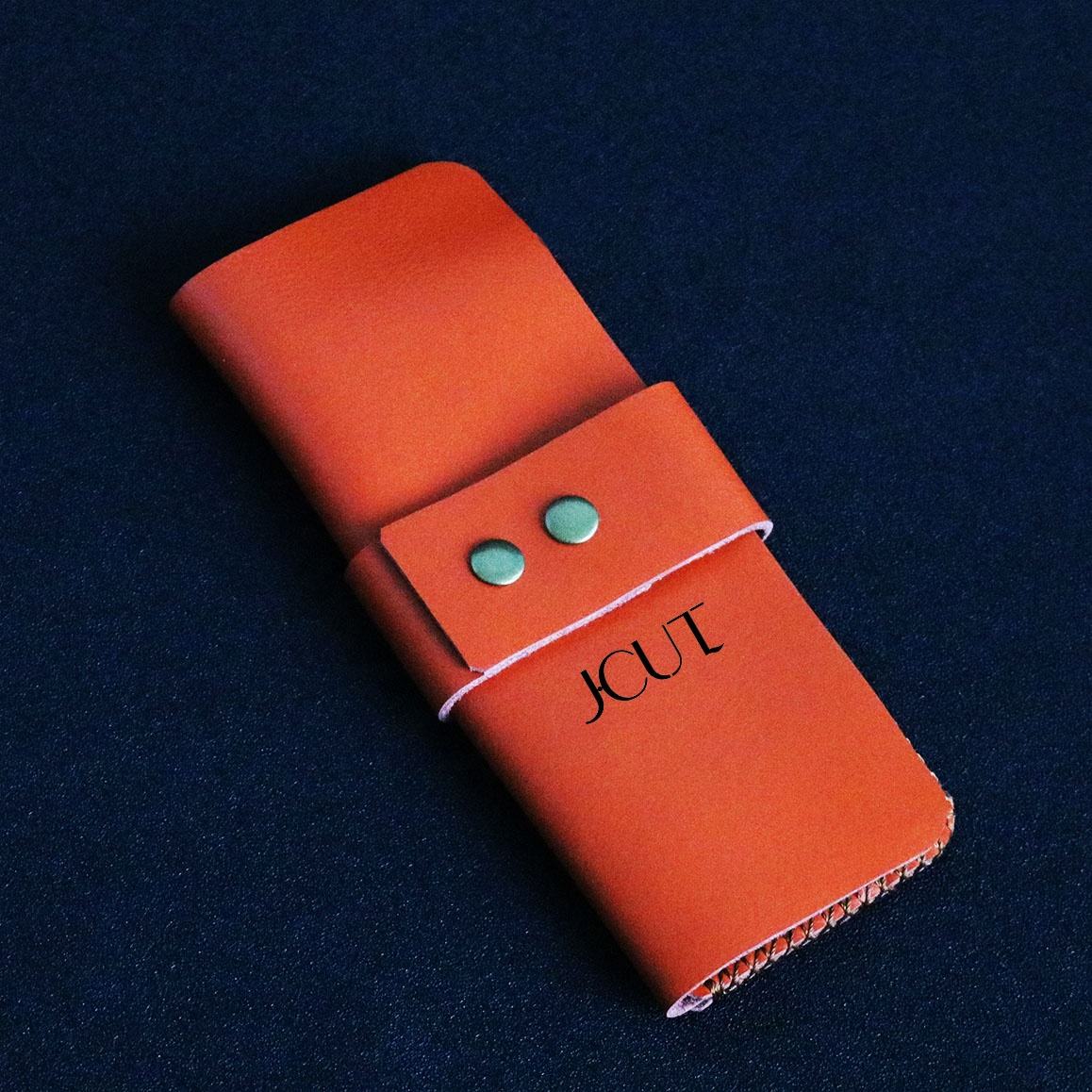
Genuine Leather Logo Case — custom-embossed packaging that lifts retail positioning
5. OEM & Private Label: Building Your Own Brand
Private label is the highest-margin path in this category, and the barrier is lower than most buyers assume — because the factory already owns the engineering. You bring the brand; they bring the manufacturing.
The Process, End to End
- RFQ and quotation (1–3 days) — send your target spec, quantity, and customization list; receive a tiered quote.
- Sampling (7–15 days) — a physical pre-production sample with your logo and finish, usually at a sample fee credited back on bulk orders.
- Confirmation and deposit — approve the sample, wire 30% to start production.
- Mass production (30–45 days) — forging, grinding, coating, assembly, and in-line QC.
- Final inspection and shipment — third-party or personal inspection against AQL, balance payment, container loading.
Total timeline: roughly 45–60 days from approved sample to goods on the water.
Realistic MOQ expectations by customization depth:
| Program | Typical MOQ | What Changes |
|---|---|---|
| Existing models + your logo | 50–100 pcs | Laser-etched logo on stock designs |
| Custom colors & finishes | 100–200 pcs | PVD color batches, custom tension dials, finger ring sizes |
| Full custom design | 300–500 pcs | New handle geometry, blade length, tooling, exclusive molds |
Why e-commerce sellers start here: a logo-level program at 100 units can be live in under two months at a total cash outlay smaller than most ad campaigns — and the resulting listing has no direct price comparison, because the SKU is yours alone.
Color-finish programs are the most popular entry point: they change the retail shelf presence completely while leaving proven blade engineering untouched.
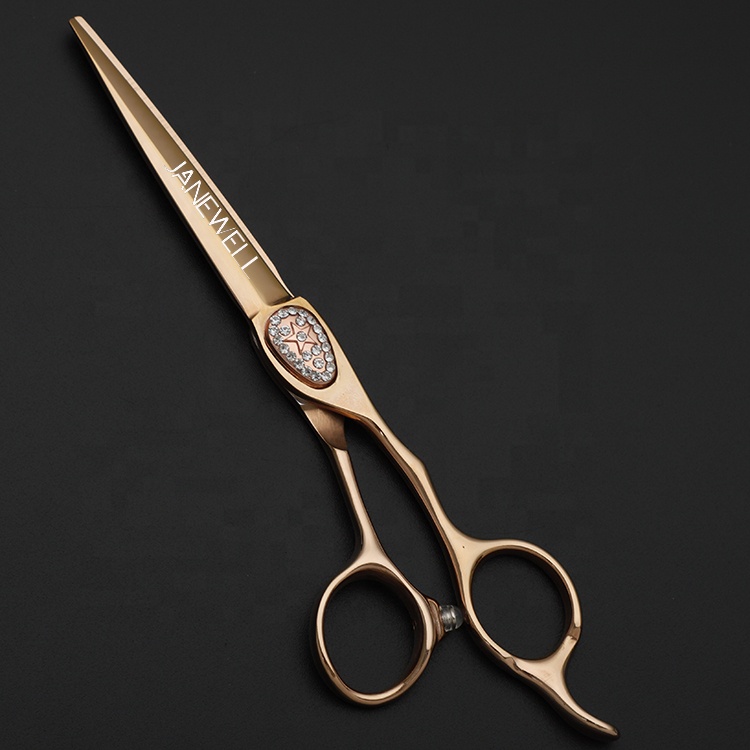
Rose Gold Professional Shears — PVD color programs are the most common private-label entry point
6. Common Traps and How to Avoid Them
Every trap below is a real pattern that repeats across buyer complaints in this industry:
- Sample-to-bulk bait and switch. Perfect samples, disappointing production. Avoid: write the spec (steel, HRC, edge type) into your PO, and inspect against it pre-shipment.
- Cast sold as forged. The price gap is attractive and the difference is invisible in photos. Avoid: forged blades show a visible hammer/forging line near the pivot and weigh noticeably more; verify with the gravity-close test.
- "Japanese steel" without documentation. The claim costs nothing to type. Avoid: request the steel import documentation or MTC before you pay for the premium.
- No after-sales sharpening support. Convex edges need professional regrinding every 6–12 months. A supplier with no sharpening guidance abandons your customers after checkout. Avoid: ask about regrinding service and spare parts before ordering.
- Unprotected payments to new suppliers. Avoid: use 30% deposit / 70% against bill of lading, platform Trade Assurance for early orders, or a letter of credit for large first containers.
- Quoted price excludes everything. A headline price without packaging, accessories (case, cloth, tension key, oil), and freight is not a real price. Avoid: demand an FOB all-in quote listing every included item.
The three-line anti-fraud summary: document the spec, inspect before balance payment, and never pay 100% upfront to a supplier you haven't met — on video counts.
7. Pre-Order Checklist
Screenshot this list and send it with your RFQ — suppliers who answer all ten well are worth a sample order:
- ✓ Are you the manufacturer or a trading company? (Ask for the business license.)
- ✓ Which steel grade and HRC hardness, with documentation?
- ✓ Forged or cast construction?
- ✓ Which edge geometry — convex, hollow-ground, or beveled?
- ✓ Full FOB quote, itemized: shears, case, cloth, oil, tension key, packaging
- ✓ MOQ per model and per color, and tier pricing to 1,000 units
- ✓ Sample cost and lead time — credited on bulk order?
- ✓ Production lead time and shipment options (air/sea)?
- ✓ QC process, AQL standard, and third-party inspection acceptance
- ✓ Logo customization: methods, setup fees, and minimum quantity
The Bottom Line
Wholesale hair cutting shears is a category where doing the sourcing work once pays out on every reorder. The market is transparent once you know the tiers ($8–15 entry, $20–50 mid-range, $60+ premium), the channels are complementary rather than competing (marketplaces to test, factories to scale), and the moat — batch-to-batch consistency from a real manufacturer — is verifiable before you commit serious money.
Your shortest path forward:
- Browse proven models to identify your target tier — the professional shears catalog is organized by steel grade, style, and finish.
- Order paid samples from two or three shortlisted suppliers and put them in a working stylist's hands for a week.
- Start the OEM conversation — a custom-logo program at modest MOQ can have your own branded shears on the market within two months. Talk to our team about spec, quantity, and branding — we respond with a tiered quote, typically within one business day.