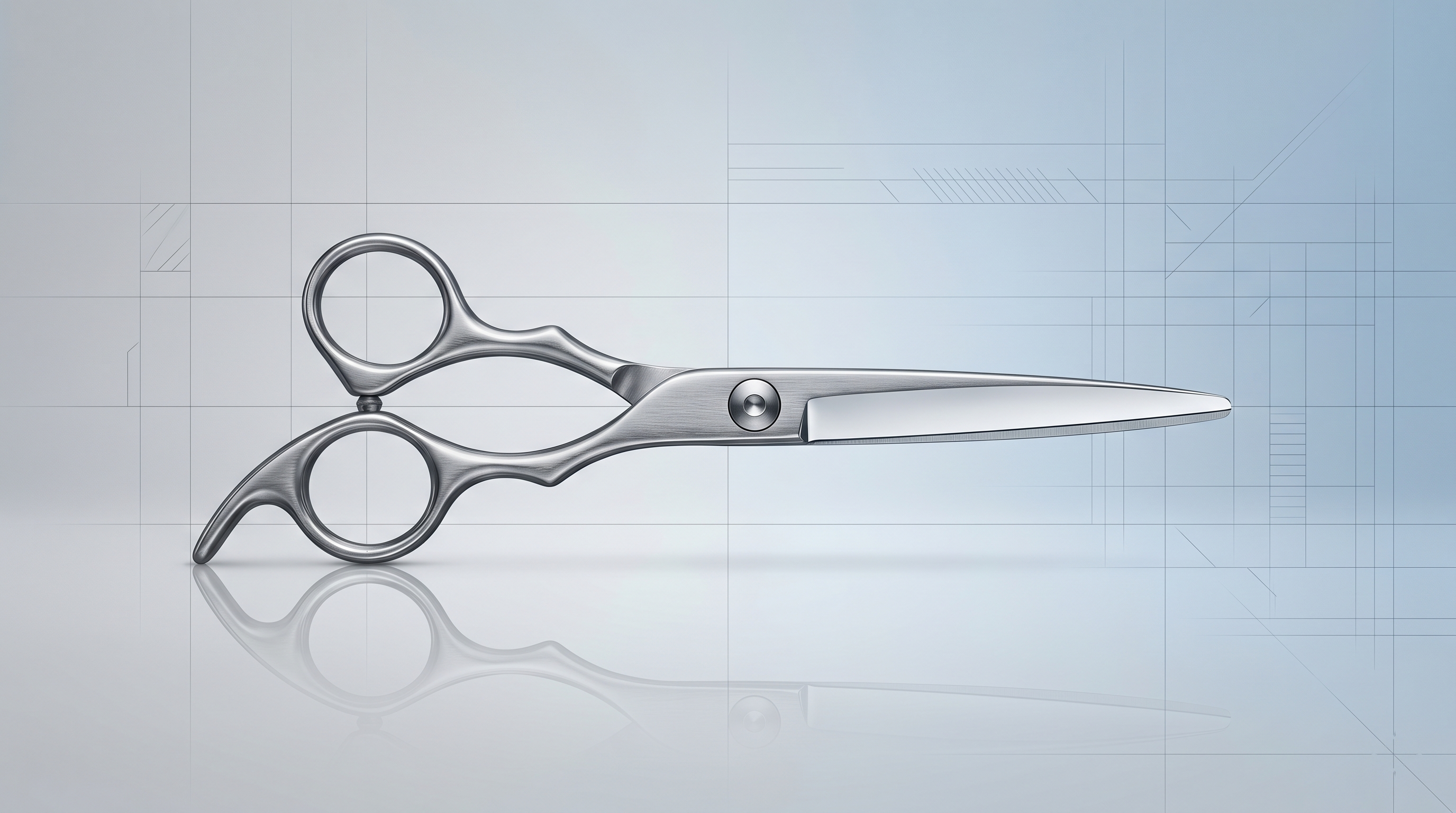
To someone outside the salon industry, a pair of scissors just needs to be sharp. But for professional stylists and barbers who perform thousands of cutting motions every day, the gap between household scissors and professional hair cutting shears is enormous.
Ordinary scissors "break" hair by crushing it between two blades, damaging the cuticle and leaving split ends. A true professional shear is engineered to slice through hair cleanly — more like a razor than a pair of scissors — leaving a smooth cross-section with minimal damage. This fundamental difference comes down to four core areas of precision craftsmanship.
1. Blade Geometry: The Art of the Cut
A shear's blade design determines its cutting feel and what techniques it can perform. Under magnification, professional blades reveal distinct geometries that drastically affect performance.
Convex Edge
The convex blade has a smooth, slightly arched profile honed to an extreme, razor-like thinness. It meets the hair with almost zero resistance, producing a silky, "melting" cut. This is the go-to edge for slide cutting, point cutting, and any advanced technique demanding precision. The trade-off: convex edges are difficult to sharpen and require regular professional maintenance.
Hollow Ground (Clam Edge)
A hallmark of Japanese shear-making, the hollow ground edge features a subtle concave groove on the inner side of the blade. When the blades close, only two ultra-fine contact lines touch, with a thin cushion of air between them. This reduces friction, prevents hair from being pushed or folded, and delivers a clean, durable sharpness.
Beveled Edge
The beveled edge has a flat, angled bevel line. While not as sharp as a convex edge, it is robust, impact-resistant, and grips hair firmly. This design excels in blunt cuts, scissor-over-comb work, and high-volume cutting where control and durability matter more than absolute delicacy.
Whatever the edge type, a quality shear has a continuous, smooth edge line from pivot to tip. The two blades should meet perfectly with no gaps — capable of cutting hair with the lightest pull.
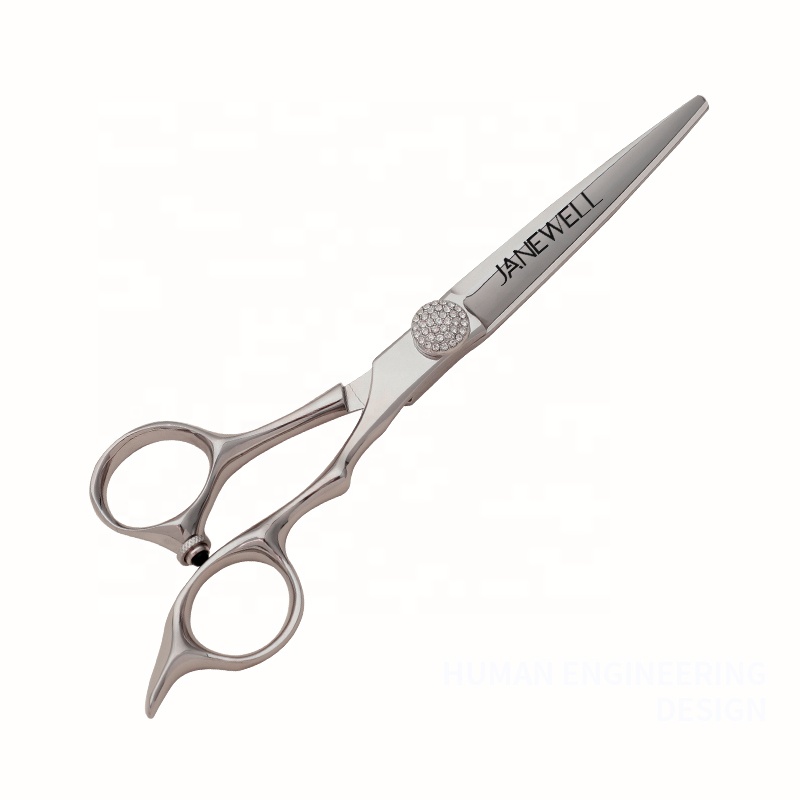
Convex Edge Barber Shears — Japanese 440C steel convex blade for effortless cutting
2. Steel & Hardness: The Foundation of Performance
If blade geometry is the soul of a shear, the steel is its skeleton. The material directly determines edge retention, corrosion resistance, and toughness.
Professional shears are measured on the Rockwell Hardness scale (HRC), typically falling between HRC 58–62. Softer steel dulls quickly. Harder steel with insufficient toughness can suffer micro-chipping along the edge — tiny invisible serrations that make the shear feel "not sharp anymore" despite high hardness.
| Steel Grade | Characteristics |
|---|---|
| 440C Stainless Steel | A classic mid-range professional choice. Good carbon content, excellent balance of toughness and hardness, easy to resharpen, great value. |
| Cobalt-Molybdenum Alloy (e.g., VG-10) | Premium professional steel. Cobalt and molybdenum refine the grain structure, extending peak sharpness and improving corrosion resistance. |
| Powder Metallurgy Steel (e.g., CPM, SG2) | Top-tier material. Metal powders are sintered under extreme heat and pressure, producing a microstructure of ultra-fine, uniform carbides. Extremely high hardness without brittleness, with wear resistance several times that of conventional steel. |
| Cobalt-Based Alloy (Stellite) | A non-ferrous alloy that is completely rust-proof. Exceptional toughness and takes a mirror-smooth edge. Shears made from this offer a unique "silky" cutting sensation and are sometimes called "semi-permanent" shears. |
Forged vs. Cast: A Difference in Density
Beyond the steel grade, the manufacturing process determines a shear's internal integrity. Budget scissors are usually cast — molten metal poured into a mold. This produces a porous, loosely packed structure prone to wear and chipping. Professional shears are forged: the red-hot steel is repeatedly hammered or pressed, aligning the metal grain and eliminating internal voids. The resulting dense structure can hold an extreme edge and withstand years of daily use. For a salon business, forged shears are not a luxury — they are the minimum standard for reliable daily output.
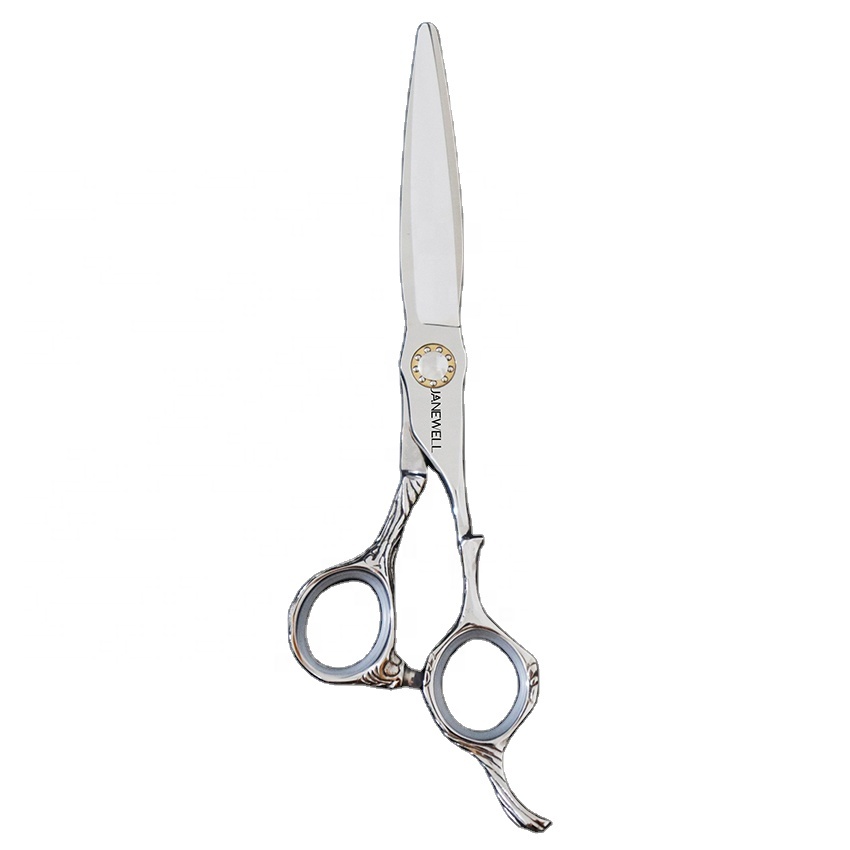
VG10 Professional Shears — Premium Japanese cobalt-molybdenum steel for extended sharpness
3. Ergonomic Handle Design: Protecting the Hand That Feeds
A stylist or barber opens and closes their shears tens of thousands of times a day. A poorly designed handle is a direct cause of repetitive strain injuries (RSI), carpal tunnel syndrome, and tendinitis — the kinds of chronic conditions that end careers.
Opposing (Classic) Handle
The thumb and finger rings are symmetrical. This traditional design forces the elbow to rise and the wrist to bend during horizontal cuts, causing rapid fatigue. It has largely been replaced by more ergonomic options in professional environments.
Offset Handle
The thumb-side handle is shortened and angled downward. This allows the thumb to rest more naturally, the elbow to drop, and the wrist to stay straight. Offset handles are currently the most widely adopted professional design — a proven choice for reducing daily strain across a full book of appointments.
Crane Handle
An extreme evolution of the offset design. The handle axis angles downward so dramatically that the hand sits almost vertically relative to the blades. This lets the stylist cut with a fully relaxed shoulder and dropped elbow, providing the highest level of health protection. For experienced professionals with existing hand or wrist issues, crane handles are often the only way to keep working comfortably.
Additional ergonomic features found on quality professional shears include removable finger rests (supporting the thumb and preventing joint deformation) and silencer rings (rubber or silicone inserts that absorb shock, reduce noise, and prevent metal allergies). Shear length also matters: 5.0–5.5 inches for detail work, 6.0 inches as an all-rounder, and 6.5 inches and above for bulk cutting and long-hair layering.
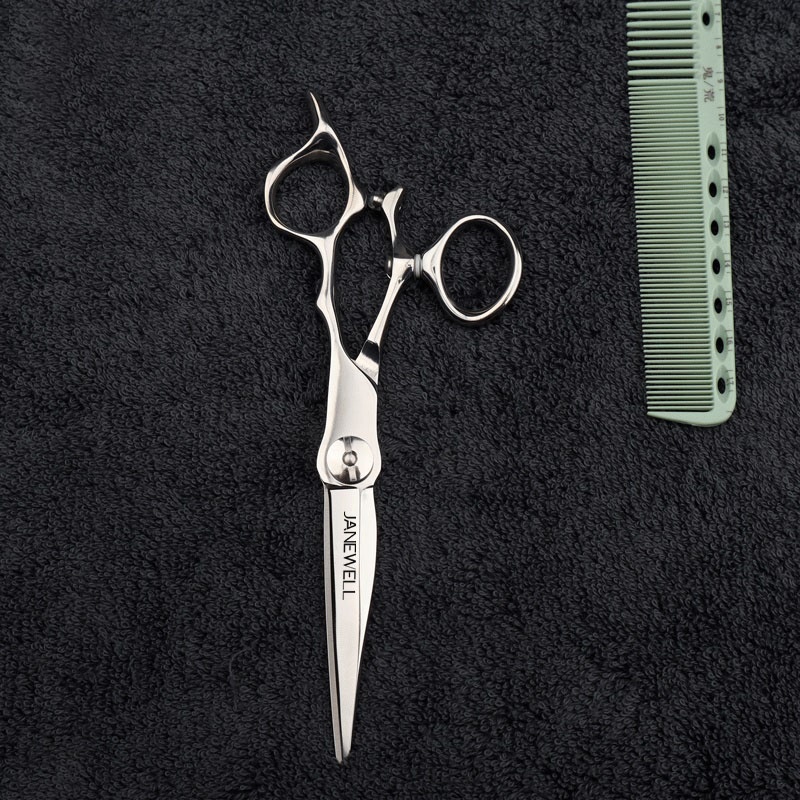
Swivel Thumb Barber Shears — Advanced ergonomic design for all-day comfort
4. Precision Tension Systems: Smooth, Controllable, Durable
A professional shear's pivot is never a simple rivet. It is an adjustable, precision-engineered assembly that allows fine control over the cutting action.
- Click Dial Tension Adjustment: A finger-turnable dial on the pivot that clicks through tension settings. Stylists adjust it on the fly depending on whether they are cutting dry, wet, or thick sections of hair. No tools needed.
- Ball Bearing System: Miniature ball bearings sit between the screw and the blades, reducing friction to near zero. The result is an incredibly smooth opening and closing motion with no side-to-side blade wobble. This system significantly extends the shear's lifespan, making it a hallmark of high-end professional tools.
- Washer System: Teflon or brass washers provide smooth damping and prevent metal-on-metal wear.
The goal of an adjustable tension system is that "sweet spot": tight enough to cut hair cleanly without folding, loose enough to avoid unnecessary friction and hand fatigue. For a business owner, a shear that can be finely tuned means fewer returns, happier staff, and more consistent results across every client.
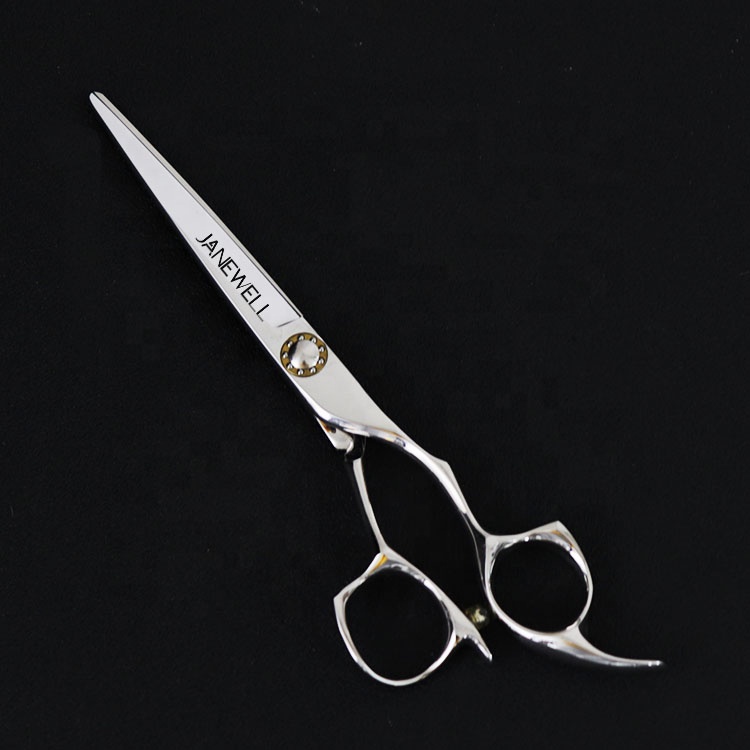
Ball Bearing Barber Shears — Precision bearing system for friction-free operation
Quick Field Test: How to Judge a Shear Without a Brand Name
Even without a logo or spec sheet, you can quickly gauge a shear's quality with these simple checks:
- Listen to the dry close: Slowly close the blades and listen. A high-quality shear produces a soft, even whisper — the sound of silk rubbing on silk. A harsh metallic scrape signals poor edge alignment.
- The wet hair test: Cut through soaking wet hair (or a wet sponge). A professional shear should bite through instantly and cleanly in one stroke — no catching, no pulling.
- The gravity-close test: Open the blades about two-thirds, point the tips down, and gently release. A well-tuned shear will close smoothly under its own weight, with the blade tips overlapping just right. It won't seize halfway, nor snap shut with a clatter.
- Balance check: Dangle the closed shear lightly on one finger at the pivot. It should hang level, with the weight centered in your palm, not tipping forward or backward.
The Bottom Line for Your Business
A professional hair cutting shear is a precision instrument built from high-grade metallurgy, dense forging, micron-level blade geometry, tunable mechanics, and deep ergonomic design. It cuts hair, yes — but more importantly, it protects the hands that earn your revenue and makes every stylist faster, more consistent, and less fatigued.
For salon business buyers, investing in professional shears is not an expense. It is a direct investment in service quality, staff retention, and daily productivity. The next time you evaluate a shear, use what you've learned here and ask: is this tool truly a partner in my craft — or just a pair of scissors?